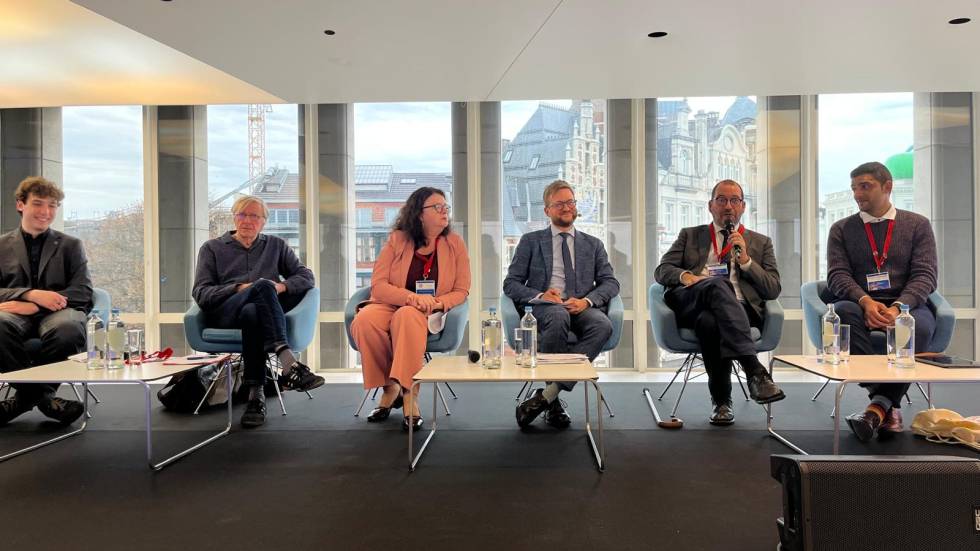
EASNIE played an active role in the 2025 European Education and Skills Summit in Brussels on 13 November. Director João Costa joined a high-level panel on confronting underachievement, sharing key messages on the importance of inclusive education and equitable support for all learners.
The Summit theme was ‘Education and Skills: fuelling Europe’s growth’, and it brought together policy-makers and education stakeholders from across Europe to discuss four key topics:
- Tackling Europe’s skills crisis
- Bridging education and industry
- Mastering basic and civic skills
- Empowering teachers and trainers.
Speakers at the event included Roxana Mînzatu, Executive Vice-President for Social Rights and Skills, Quality Jobs and Preparedness at the European Commission, Britta Seeger from the Mercedes-Benz Group, and former Italian Prime Minister Enrico Letta. Plenary sessions on partnerships between education and business and on citizenship education included panellists from European businesses and universities and representatives from the European Commission, national governments, and education and skills organisations.
EASNIE Director João Costa participated in a panel session alongside representatives from the Austrian education ministry, Ghent University, the Organising Bureau of European School Student Unions, and the National Youth Council of Ireland. Titled ‘Confronting underachievement: what measures to ensure every child can master basic skills?’, the panel highlighted the fact that many learners who underachieve in school come from disadvantaged backgrounds and stressed the importance of inclusive education systems to overcome this.
The panellists agreed on the need for inclusive early childhood education and the importance of on-going teacher training to enable teachers to teach all learners, no matter their needs or background. They also emphasised co-operation and collaboration across education systems and the need to listen to learners’ and families’ voices when developing education systems that allow all learners to achieve their goals.
Other panel sessions throughout the day included discussions around closing the STEM gap, vocational education and training, higher education, and the relationships between education and business.
More information about the Summit is available on the Commission website.